Blog

  • How AI is Transforming Healthcare:

    From Doctor’s Assistant to Personal Medical Advisor
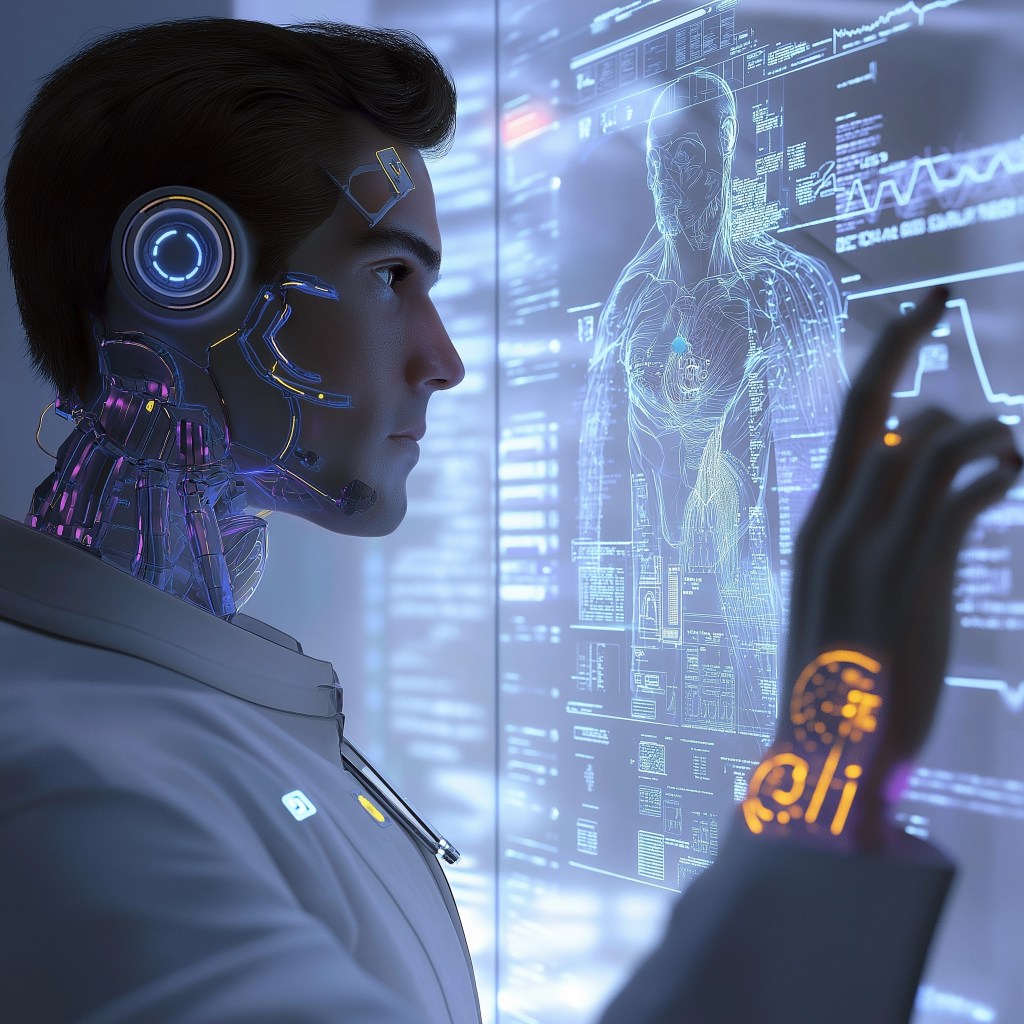
    The Future of AI in Medicine: Aiding or Replacing Doctors?

    Imagine having a personal AI doctor available 24/7 on your smartphone. This future is closer than you think. Instead of waiting weeks for a doctor’s appointment, patients will soon have AI-powered medical assistants at their fingertips, ready to provide real-time health guidance, diagnose symptoms, and recommend lifestyle changes.

    Artificial Intelligence (AI) is rapidly transforming the medical field, offering unprecedented advancements in diagnostics, treatment planning, and patient care. AI can analyze vast amounts of medical data in seconds, identifying patterns that even the most skilled doctors might overlook. This raises an important question: Will AI replace doctors, or will it simply enhance their abilities?

    How AI Can Be Better Than Doctors

    AI’s ability to process and analyze massive datasets gives it a distinct advantage in certain areas of medicine. Unlike human doctors, who rely on years of experience and medical knowledge, AI can instantly access and interpret millions of medical studies, patient records, and genetic data. This allows AI to predict diseases earlier and recommend personalized treatment plans based on real-time data. For example:

    • AI-powered imaging tools can detect cancerous tumors at an earlier stage than human radiologists.
    • AI algorithms can predict potential health risks based on genetic markers and lifestyle factors.
    • Virtual health assistants can monitor chronic conditions, reminding patients to take medication and recommending lifestyle changes.

    The Changing Landscape of Healthcare

    The traditional healthcare model is shifting as AI takes on a more prominent role. Hospitals are already integrating AI for faster diagnosis, personalized treatment plans, and robotic-assisted surgeries. In the near future, AI will become an indispensable tool in every aspect of medicine. Here’s how:

    • Faster Diagnoses: AI can process lab tests, imaging scans, and medical histories instantly, reducing the time needed to identify conditions.
    • Predictive Healthcare: AI-driven analytics can forecast potential health issues before they manifest, allowing for proactive treatment.
    • Robot-Assisted Surgeries: AI-powered surgical robots can perform procedures with more precision than human hands, leading to fewer complications and faster recovery times.

    While AI will not completely replace doctors, it will certainly redefine their roles. Physicians will shift from primary decision-makers to AI-assisted consultants, focusing on complex cases that require human intuition, ethical considerations, and emotional intelligence.


    The Rise of Personal AI Healthcare Assistants

    From Doctor’s Assistant to Personal Medical Advisor

    AI-Powered Healthcare at Your Fingertips

    With AI-driven apps and devices, patients will be able to:

    • Ask Health-Related Questions Instantly: No more waiting for appointments; AI can provide immediate answers based on medical knowledge and personal health data.
    • Receive Personalized Diet and Lifestyle Advice: AI can analyze eating habits, exercise routines, and genetic predispositions to recommend the best course of action for optimal health.
    • Monitor Chronic Conditions in Real-Time: AI can track blood sugar levels, heart rate, and other vital signs, alerting users and doctors to potential issues before they escalate.

    Companies Leading the AI Revolution in Healthcare

    Several innovative companies are at the forefront of AI-driven healthcare advancements:

    • IBM Watson Health – Uses AI to analyze medical literature and assist doctors in diagnosing complex diseases.
    • Google DeepMind Health – Develops AI models for detecting eye diseases and predicting patient deterioration.
    • Butterfly Network – Offers AI-powered handheld ultrasound devices, making imaging more accessible and affordable.
    • Ada Health – Provides an AI-powered chatbot that assesses symptoms and offers medical guidance.
    • Babylon Health – Uses AI for virtual consultations and symptom checking, helping patients receive faster care.

    The Future of AI in Medicine

    AI is poised to become a patient’s first point of contact for healthcare needs. With its ability to provide instant, data-driven insights, AI will empower individuals to take charge of their health like never before. While human doctors will always play a crucial role, AI will augment their expertise, making healthcare more accessible, accurate, and personalized.

    The era of AI-driven medicine is just beginning. Soon, everyone will have a medical assistant in their pocket, revolutionizing the way healthcare is delivered and experienced.

  • Women and AI: The Silent Career Setback No One Is Talking About

    Why Women Must Embrace AI or Risk Falling Behind in Their Careers

    Artificial intelligence is reshaping industries at an unprecedented pace, creating new opportunities and transforming the way we work. Yet, there is a growing divide in who is embracing this change, and unfortunately, women are lagging behind in AI adoption. This hesitation isn’t just about technology—it’s about career advancement, financial success, and long-term influence in the workforce.

    The Growing AI Gender Divide

    Across industries, AI tools are proving to be game-changers. From automating repetitive tasks to enhancing creativity and decision-making, these technologies allow professionals to work smarter, not harder. However, many women are reluctant to adopt AI at the same rate as men. Whether due to ethical concerns, a fear of being judged, or a simple lack of exposure, this hesitation could have lasting consequences.

    AI is not just another workplace tool—it’s becoming a fundamental skill, much like proficiency in spreadsheets or email once was. Those who master it early will gain an edge, while those who resist risk falling behind. As businesses increasingly integrate AI into daily operations, women who hesitate may find themselves at a disadvantage in promotions, salaries, and job opportunities.

    Career Setbacks and the Productivity Gap

    One of the biggest risks of avoiding AI is the growing gap in workplace efficiency. AI-enhanced productivity means faster problem-solving, improved decision-making, and higher output with less effort. When men are leveraging these advantages while women hesitate, the result is clear: a widening gender gap in career progression.

    The workplace has long rewarded efficiency and results. If one group is consistently delivering more with the help of AI, they will naturally be prioritized for leadership roles, salary increases, and career-defining projects. Women who shy away from AI risk being seen as less competitive—not because they lack talent, but because they aren’t maximizing the tools available to them.

    The Ethical Dilemma Holding Women Back

    A significant reason women hesitate to embrace AI is the concern over ethics. Many worry about the accuracy, fairness, and potential biases embedded in AI models. While these are valid considerations, opting out of AI usage does not solve the problem—it only removes women from the conversation. Instead of avoiding AI, women should be at the forefront of shaping how it is used responsibly.

    History has shown that when women are not actively involved in technological advancements, the resulting systems often fail to address their unique challenges. If AI development is left to a predominantly male user base, the models will reflect that bias, reinforcing existing inequalities rather than correcting them. The best way to ensure AI serves everyone fairly is for more women to engage with it, train it, and challenge it where necessary.

    The Long-Term Financial and Economic Impact

    Beyond individual career setbacks, there is also a broader economic impact to consider. When a large segment of the workforce does not fully embrace AI, businesses lose out on potential productivity gains, and economic growth slows. Women-owned businesses, in particular, could suffer if they do not incorporate AI into their operations, allowing competitors to outpace them.

    Moreover, AI is not just shaping how work is done—it’s defining who holds power in the digital economy. Those who understand AI, use it effectively, and contribute to its evolution will have the greatest influence in shaping industries of the future. If women do not claim their place in this space, they risk becoming sidelined in the very workforce they have fought hard to thrive in.

    How Women Can Stay Ahead

    The good news is that this gap can be closed. AI is still in its early stages, and there is time to adapt. Here are some key steps women can take to ensure they remain competitive in the AI-driven workforce:

    1. Learn and Experiment – AI is not as complex as it seems. Many tools are user-friendly and can be integrated into daily tasks with minimal effort. Taking time to explore and experiment with AI will help build confidence and familiarity.
    2. Advocate for Ethical AI – Instead of avoiding AI due to ethical concerns, women should actively participate in discussions on responsible AI use. This ensures their perspectives shape the technology rather than being excluded from it.
    3. Normalize AI in the Workplace – The stigma around AI as a “shortcut” or “cheating” needs to be eliminated. When companies encourage AI use as a standard tool rather than an unfair advantage, more women will feel comfortable leveraging it.
    4. Mentorship and Collaboration – Women who have successfully integrated AI into their work can mentor others, creating a supportive network that encourages AI adoption without fear or hesitation.

    Conclusion

    Technology waits for no one. AI is already redefining careers, and those who hesitate risk being left behind. Women must embrace AI not just as a tool but as an opportunity—one that can enhance productivity, open doors to leadership roles, and ensure they have a voice in shaping the future of work. The choice is clear: adapt and thrive, or risk being sidelined in the next era of professional success.